Tuesday, October 30, 2012

...Someday comes back...

There’s a lot of concern for those on the east coast, I have a cousin that lives in New Jersey with his family, and an old colleague that has been connected with The X-Files Lexicon, Christopher Knowles lives in Jersey, I hope he and his family are safe. The following song has been running in my mind for the past day, to the point of haunting me.


To those who have lost their lives due to Hurricane Sandy, you will be remembered, and our thoughts are with those who are suffering due to this storm, we will weather it.
At a time like this, please donate to an organization like the Red Cross who are helping to assist the Hurricane Sandy victims.

It is sobering times like this that allow us to reflect. I hope all fans are safe tonight.

Sunday, September 30, 2012

Esoteric Studies: Otorten Incident, 1959

One of the more positive aspects of the Ancient Aliens program on the History Channel is the fact that it explores some subjects that I haven’t found commonly explored within UFOlogy. One program from season three dealt with alleged “Cursed Places”: areas that have such unexplained activity that the results lead to disappearances or fatalities. Yet one segment was especially fascinating, the 1959 incident at Mount Otorten in Russia.


I don’t want to dwell too in depth into the details, as several web resources offer an excellent overview of the basic details, which you can find here, and here.

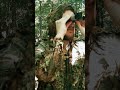
Photo of the hikers preparing to camp, Feb 2, 1959.
There are countless mysteries as to what happened, as well as theories. The common theory was that the hikers were exposed to extra-terrestrial craft and that the intense radiation triggered the pre-mature aging, burns, broken bones, or ruptured organs, depending on how one interprets the autopsies. Other’s argue the hikers were exposed to living entities made of energy that travel between dimensions. Yet if that were the case, how can we explain the physical evidence regarding Ludmila Dubinina, who was found with no tongue?

The mutilation of Lubmila Dubinina does match other reports found within cattle mutilations, missing organs, blood that has been drained, etc…and this set’s up a dilemma for the argument that the hikers were exposed to energy based entities, or energy probes. Of course, the Russian military could have covered up the incident, if they were conducting experiments with some kind of energy weapon, and perhaps a member of the rescue team had removed Dubinina’s tongue to hide proof that some kind of pulse based energy weapon had been used. One question that has to be explored would be if the Russian military had the capability of experimenting with such weapons at the end of the 50s?

There is evidence that Russia, like America, had begun to research anti-satellite weapons starting in 1956 when Sergei Korolev had started to work on the concept at OKB-1, while other’s attribute the work to Vladimir Chelomei and his OKB-52 around 1959. So, it’s possible that a classified experiment was underway during that period. But then again, one would have to discount the legends from the local Mansai’s about such events happening in ancient history, when you consider the Mansai legend of man dying in the same area during an ancient flood.

Jacques Vallee has argued for the interdimensional and extradimensional hypothesis as an alternative to extra-terrestrial hypothesis, and Christopher Knowles has leaned towards the idea that many extra-terrestrial craft could be living entities. Paranormal researcher Brad Steiger has written “We are dealing with a multidimensional paraphysical phenomenon that is largely indigenous to planet Earth.”


When one considers the countless encounters within Leslie Stevens The Outer Limits that were beings based on energy. and a series that taped into the idea of a wide variety of alien life, and thus following into the common tradition of a lot of science fiction: alien life taking on many forms and from many dimentions. Or even The X-Files episode, "Fallen Angel" that featured an extra-terrestrial cloaked in an energy field.

Then again, how does this all jive with certain details within the Mount Otorten incident?

If those hikers encountered an interdimensional entity that was highly evolved and sentient, wouldn’t such an entity be aware that it’s exposure to human beings was harmful? These issues set up an Gordian Knot, an intricate, seemingly insoluble problem when trying to categorize what this incident depicts and what it represents. The Otorten Incident might illustrate not being locked into one type of hypothesis when it comes understanding such unexplained phenomenon, but to adopt an ‘all of the above’ on a case by case basis.

Be it biological beings with mechanical craft, or beings made of energy, or interdimensional beings that might very turn out to be us, our descendents from some far future.

Friday, August 24, 2012

The Ophiuchus Code: Redux

Duran Duran, Lacerta, and Ophiuchus: Road Signs to Choice

(The following is pure speculation and observations, possible true and false assumptions, there's nothing definitive in the following points. -MA)


I’m reticent to throw around the word “Synch” for the following points, as “Synchronicity” is so freely misused–that is, if one grasps Jung’s technical definition to use when applicable--yet on the 19th of July, at night, before news of The Dark Knight Rises theatre shooting in Colorado, a song was running in my mind that hadn’t crossed my attention for a spell: the B-Side of Duran Duran’s “Union of the Snake” single, “Secret Oktober”.

At the height of Duran Duran mania in late 1983, they released this rather cryptic single from their third album Seven and the Ragged Tiger. A song, that some argue, holds illuminati references along with their follow-up single “New Moon On Monday”. I have never bought into the argument that Duran Duran was consciously pushing an illuminati agenda, or the more absurdist angle that the band was pushing some Satanist / illuminati meme. The term ‘occult’ which means ‘hidden from view,’ or a system claiming use or knowledge of secret or supernatural powers or agencies, has been so misused to infer Satanism, or as a negative, while it’s historical meanings are more complex. Simon LeBon back in the eighties had described the meaning behind “Union of the Snake” in an 1984 interview with the following:

“I’ll tell ya. The union of the snake is the union of the snake and the man. The snake symbolizes a kind of subconscious power force or strength, and the song is really about the fears of the subconscious mind breaking through to the conscious mind.”

Some have argued this states the song’s outright occult meaning, but I have to say, this certainly sounds like someone (Le Bon) that has a passing understanding of Jung and Freud. Jung offers some interesting distinctions within his “The Psychology of the Child Archetype” – 5. ‘Child God and Child Hero’*;

“Snake-dreams usually occur, therefore, when the conscious mind is deviating from its instinctual basis. 
The motif of ‘smaller than small yet bigger than big’ complements the impotence of the child by means of its equally miraculous deeds. The paradox is the essence of the hero and runs through his whole destiny like a red thread. He can cope with the greatest perils, yet, in the end, something quite insignificant is his undoing: Baldur perishes because, and so on. 
The hero’s mean feat is to overcome the monster of darkness: it is the long-hoped-for and expected triumph of consciousness over the unconscious. Day and Light are synonyms for consciousness, night and dark for the unconscious…Even among primitives today the possession of a soul of the mistletoe, Maui because of the laughter of a little bird. Siegfried because of his one vulnerable spot, Heracles because of his wife’s gift, others because of common treachery is a precarious thing, and the ‘loss of soul’ a typical psychic malady which drives primitive medicine to all sorts of psychotherapeutic measures. Hence the ‘child’ distinguishes itself by deeds which point to the conquest of the dark.”*

Most people can relate to moments in their lives when things were going well; a good relationship, a good career path, and they will take a course of action that undermines those positive developments. Unconscious self sabotage, this conflict of good, and ill, the struggle to appeal to our better angels, choice and freewill, are age old issues for an individual, but the above points are also relevant to us in society as a collective whole. Some of Jung’s point will be more relevant in the continuing piece. But the fear of the unconscious driving us to self destruction is a very real concern, and why understanding the psyche, as argued by Jung and Freud, becomes extremely important, but I have digressed. Let’s look further into the conflicting meanings of the Duran Duran track.

While there might very well be an esoteric meaning as argued by some, simply on the basis of the “Union of the Snake” single sleeve, which some argue a bonified example, an eye symbol as a reference to the illuminati ‘all seeing eye,’ while many of these proponents are remiss in acknowledging that same symbol had been used on the Rio album sleeve. The company ‘Assorted Images,’ Malcolm Garrett, and Keith Breeden had designed the sleeve. Perhaps there was a directive from the band to design ‘something cool with occult symbols.’ Perhaps those choices came from the stylistic whims of Garrett and Breeden. Nothing operates in a vacuum, and many ideas in pop culture are lifted from historical sources. Nevertheless, there needs to be something more substantial to the argument rather than throwing out ‘illuminati’ at every rock album sleeve design, but a basis of evidence that supports past influence. We’ll get back to this debate in a moment.

Of course the configuration of an eye and snakes is nothing new, think the phrase ‘snake eyes’, the following image, a drawing of a motif from a Roman mosaic on the floor of a house in Moknine, Tunis, represents an apotropaism against the evil eye, as demonstrated from Jung.*


But a key point is the following: Symbols can have one meaning, and re-appropriated into having another meaning, often with negative connotations, the Nazi’s mastery of re-appropriating symbolism is a classic example. Therefore, one should be vigilant when researching the origins of symbols to find out the original meaning, and not take at face value what one initially learns, especially on the internet.

A few other points about Duran Duran should be mentioned. The sleeve design might have been inspired as a byproduct of the Indiana Jones craze following Spielberg and Lucas’ ‘Raiders of the Lost Ark’, a lot of films, and music pop culture mired from that 30s adventurer sensibility till in the early eighties. As well as a cross influences that were jumbling about, the bulk of the 1982 Rio videos were filmed in Sri Lanka, and the Indiana Jones II production crew were already filming “Temple of Doom” in Sri Lanka in 1983. The “Union of the Snake” video seems to depict a post-apocalyptic, Mad Max desert, where Le Bon descends into an under-ground cavern. There’s even some reference to child sacrifice / abuse.


Yet, the single’s B-side has always resonated for me:


Wise on a birthday party
In a world full of surprising fireworks
And sudden silence
Lies on a stranger's bed
The new day breaks like a speeding train or an old friend
Ever expected, but never knocking
Holding your own in a battered car
All night parties, cocktail bars and smile
When the butterfly escapes the killing jar

Sure eyes awake before the dancing is over
Wise or naked in secret Oktober

Freefall on a windy morning shore
Nothing but a fading track of footsteps
To prove that you'd ever been there
Spoken on a cotton cloud
Like the sound of gunshot taken by the wind
And lost in distant thunder
Racing on a shining plain
Tomorrow you'll be content to watch
As the lightning plays along the wires and you'll wonder

Sure eyes awake before the dancing is over
Wise or naked in secret Oktober
Sure eyes awake before the dancing is over
Wise or naked in secret Oktober...

The actual track itself, that was allegedly put together by Rhodes and LeBon in a late night session--a piece of electronica, sans bass and guitar, with a tribal rhythm that predates their Arcadia project collaboration--seems to touch on something primal. We’ll get back to its personal significance in the next piece. Now, Simon LeBon has admitted his early lyric writing was influenced by Jim Morrison and the Doors, and for the band, David Bowie had been a profound influence. It stands to reason that Bowie’s occult dalliances in the 70s, had compelled the band to mine in the same esoteric milieu. There had been further arguments for the Illuminati references on the front and back cover for Ragged Tiger. The symbol to the left could be a reference to Saturn, the symbol to center right could be a reference to Jupiter, and the symbol to the right a hybrid symbol of Ophiuchus and the infinity symbol?


Actually, no, and therefore there’s a basis in the assumption of Satanic influence. The symbol looks like the Satanic Cross, but as defined in Wikipedia, the satanic cross is a variation of the alchemical symbol for Sulfur. The Sulfur symbol was placed above the Nine Satanic statements in Levay’s Satanic Bible, but it could be interpreted as a combination of the Lorraine Cross and the mathematical symbol for infinity, or as a phallic reimaging, while associated with Satanism due to LeVay. Hermetic alchemists of the renaissance used the emblem of earth and spirit by combining a square cross with the cross of Christ, and when drawn symmetrically, it symbolized the hermetic maxim, “As above, so below.”


There are several other images that need to be cited. The grid is labeled with matching runes, The Glyph on the cover looks like an Eihwaz–the yew–rune of protection, and it is also a mark of the masons. A variation of that glyph, as well, shows up in German heraldry. The Glyph shares similarities with the Wappen Kleinblitterdorf coat of arms. The Glyph also shares similarities to the Wolfsangel or “Wolf-Hook,” which is a term for heraldic changes. While the Wolfsangel is identified with German Nazi symbolism, none of the modern symbols called Wolfsangel are historically part of any runic alphabet.

One of the things that have resonated for me was the pairing, the juxtaposition of "Union of the Snake” / “Secret Oktober.” Let’s review the basics of what had been discussed here and here. Ophiuchus was part of the 13 Zodiac system; it is the thirteenth sign, and is known as the lost sign. The sign falls between Sagittarius and Scorpio, and in mythological terms Ophiuchus was known as the Snake holder. At the time, I drew a specific correlation between Ophiuchus and the Ouroboros, which represents self-reflexivity or cyclicality, that sense of something constantly re-creating itself. Bear in mind that Ophiuchus is known as an interpreter of dreams or premonitions. Between the front and the back of the Ragged Tiger sleeve, one can find thirteen symbols, several barely discernable.

Astrologers have noted a harmonic convergence between the constellation Ophiuchus and Saturn in August 1987 and an Ophiuchus and Jupiter retrograde in April 2007. Yet Liz Durkin, an associate from Christopher Knowles’ Secret Sun, offered up a range of  information;

Although it is often called "the thirteenth constellation" it is actually the 10th if you follow the traditional order. It has been combined with the stars of Scorpio because most of it lies above and on the ecliptic, standing over the Scorpion, which swings quite south of the ecliptic under Ophiuchus. Antares, heart of the Scorpion, defines the center of the sidereal sign of Scorpio, and embodies the essence of the Scorpio constellation. Antares lies below the ecliptic as well, in the body of the Scorpion. Because Ophiuchus actually crosses the ecliptic (where the planets transit) its stars should be considered as influential to our local planets that pass by it. As argued by Liz Durkin.

But in India they have it covered. In the Vedic tradition of Astrology, Ophiuchus falls in the 18th nakshatra (lunar mansion) called Jyeshtha, meaning the eldest wife of the moon (opposite its favorite young wife in Rohini). This nakshatra is ruled by the planet Mercury and associated with the deity, Indra, the dragon slayer, and thunderbolt. James Holmes has three planets (Sun, Mercury, and Saturn) in Jyeshtha/Ophiuchus in the 12th house that rules hospitals, prisons and ashrams -- the places outside of mainstream.

In ancient Greek mythology, Ophiuchus was the son of Apollo and Coronis who cheated on the god and was killed by Apollo's sister, Artemis. Little Ophiuchus/Aesculapius was foster by the centaur, Chiron, who taught him the art of healing. Ophiuchus/Aesculapius learned how to raise the dead which threatened Hades, who complained to Zeus, who then killed Ophiuchus/Aesculapius with a thunderbolt. Apollo raised him from the dead and placed him in the stars. So Ophiuchus is really a child of the sun God Apollo and was killed by Zeus (Jupiter).

Tracy Twyman furthered offered some intriguing, yet perhaps tenuous, ideas about Ophiuchus that connects him with Saturn and Abraxas, the Gnostic deity. She had written about the symbolism of child sacrifice and brephophagy (eating of babies) in medieval alchemical manuscripts. She argues that in alchemy, it is symbolized by Saturn, who in roman myth was said to have swallowed his own children. She drew a connection to the most basic concept in the history of religion, the sacrifice of the first-born. Noting that alchemists wrote in coded language about the process of creating the Philosophers Stone, which involved the sacrifice of a baby, while Twyman rebutted the vicious urban legend of Jews sacrificing Christian babies at Passover, and turning the blood into matzo, connecting blood with renewal. She cites that Ophiuchus is associated with the Mesopotamian god, Sagimu, the God of Invocation. She draws some distinctions that the snake between the feet of Ophiuchus could be thought of as an umbilical cord, and that Ophiuchus himself might be a fetus. She adds:

Another word for this constellation is Anguis. That’s a word indicating something that is part snake. Since his sacred animal is the cock, I am reminded of the so-called Anguipede, the cock-headed god of the gnostics, Abraxas, which had legs made of serpents. He is sometimes called Alpheichius, which contains the word Alpha, the first letter of the Greek alphabet.

Again connecting to the original thread, Alpha and Omega, the beginning and end, she further adds:

What we have here is a meme embodying the concept of a sacrificial victim, a fetus, who is killed and then ritually reborn, phoenix-like, as a way of initiating a new age. I think this is why Ophiuchus is being trotted out now as the new zodiac sign: so that the calendar and the monetary system can be changed suddenly on a global scale, to bring us into a new era.

Without trivializing real world matters, one has to wonder with the spate of mass shootings we are seeing in America and Europe, driven by unstable individuals, if this explains the “Blood Libel” sacrifices we seem to be living under through this transitional period. I’m not certain I really accept the notion that blood equals renewal in a literal sense, being that myths and archetypes are figurative symbols to guide. Yet some seem to believe so, or are tragically misinterpreting the signs. Burt Reynolds in his X-Files appearance in “Improbable” argued for learning to read the numbers (or signs) correctly.

Yet, then what about this juxtaposition between the snake figure and October? Was it an unconscious inspiration, or based on certain sources? There may be some basis, although again tenuous. Lacerta, the “lizard”, which has been described as shaped like a small W, is also known as Little Cassiopeia. Lacerta is one of the main constellations that are visible during the month of October. As cited from Masm:

The Demeter goddess looked for its Persefone daughter, who had been raptada by Hades. When it passed by the region of Atica, one felt thirsty and it requested water to drink (from) a woman called Misme. The goddess drank with such avidity that caused the laughter of Ascxabalo, a son of Misme. Angered of which, they smiled themselves of her, threw on him the rest of the water and the boy became lizard or lacerta like Latin nomenclature of the constellation.

Could the myths of Ophiuchus and Lacerta illustrate a way through our transitions? One then has to look at the present state of our society, especially in America, and see if pop culture is reflecting this state, which is why The Dark Knight Rises seems so prescient, for good or ill, which we’ll explore in the next piece.

To be continued…

Special thanks to XScribe for editorial assistance, and to Liz Durkin for some incredible research and resources.

* C.G. Jung – The Archetypes and the Collective Unconscious, published by Princeton / Bollingen, © 1959, reprint, © 1990.

Wednesday, August 8, 2012

Profile write up in Bluebook magazine

This came as a bit of a surprise, as far as when it was going to be published, but a great friend of the site, Sarah Blinco, had offered to attempt some publicity to help the Lexicon, starting about two years ago. She wrote up a great profile piece that has been printed in an on-line fan magazine, all about The X-Files, Bluebook.

Please check out page 32-34. The formatting might require some plug-in, fair warning, but it's worth a look.

Wednesday, July 25, 2012

For What It's Worth

"I am responsible for everything...except my very responsibility" – Jean-Paul Sartre as cited in Millennium, 522666

On the morning of July 20th (Ramadan) I woke up to the news about the Holmes / Dark Knight Rises Theatre shooting in Colorado, I decided to not bother with following news media spin about the tragedy that morning; it was indeed sickening, but I pretty much suspected it would be the usually ghoulish reporting, the same kind of thing we have seen with Columbine, or Virginia tech, or any number of shootings that have played out in the last decade. It’s interesting to note how the media has ignored another tragic shooting in Chicago, late May, Memorial day, where 10 people died, and 43 were wounded. While it was written about in the press, I recall scant attention with the media. There seems to be a tragedy du jour with what the networks will cover. The last ten years has seen an epidemic of mass shootings, and there are plenty of blame to be assigned as to why that’s the case.

I spent that morning following up on seeing “The Dark Knight Rises”, and tried to remove myself from the tragedy, a somewhat difficult challenge, but I simply wanted to wait for more information, process what I could, before drawing correlations. Within the narrow space of mere days, there has already been too much hand-wringing speculation on all sides, and a premature rush to offer MK Ultra conspiracy ‘False flags’, before the Holmes arraignment by the courts, or the Alex Jones contingent. Such masturbatory conspiracy gossip at an early stage, undermines legitimate conspiracy theory research, and most importantly, trivializes the victims and their families, as pointed out by Christopher Knowles.

What I can talk about at this stage, and something I’m seeing hardly discussed, is the crisis of mental health, and the state of our mental health in America, and an across the board support system that is nil. It has been apparent that the media, and segments of the society celebrate psychosis as a ‘normal’ state to be just accepted. When ever the media reports these tragedies, such reporters feign surprise, as though the news media never itself contributes to the celebration of psychosis. The news media will issue missives and reports from neighbors who express shock about someone like Holmes; that they had no idea that the shooter was that disturbed. While the following point won’t be well received, one has to wonder whenever neighbors / classmates/ co-workers express how oblivious there were about the condition of the shooter, was it just a case that acquaintances of the shooter were oblivious, or were they just too self-absorbed to notice the signs?

A part of me suspects societal self-absorption is one culprit, but the other truth is that in America, we are not comfortable dealing with mental illness, much in the way, many want to turn their eyes away from people with physical disabilities. We have politicians, both on a state and federal level, that have defunded mental health programs and have allowed state mental health hospitals to be shut down. We also have health insurance companies, depending on the state, that won’t cover the mental health costs for therapist’s or psychiatrists, nor the facilities that can offer the resources as a preventative measure.

To some degree, you have patients who refuse to help themselves. My middle-half brother is the black sheep of my family, in some circles he is considered a border-line sociopath who is in dire need of therapy, yet he refuses to seek help. In fairness, he has never been arrested nor committed any violent crime, but there is something that feels ‘off’ about him.

Over the last three years, I have developed a first hand experience on this issue, due to my Mother, who has been suffering from depression / anxiety, it has been a recurring problem for her entire life at various points, and it has resurfaced in her twilight years. There was a period where she was participating with a University department facility, where there treatment worked for about a year, then stopped working, where her doctors were residences that insisted on offering the same psychotropic medication, even when she kept insisting the medication wasn’t working. This resulted with her having to be admitted to their emergency room several times due to anxiety / suicidal tendencies, in spite of being admitted into their psychological program twice, thus illustrating the very textbook definition of insanity – doing the same thing over again and expecting a different result.

What was worse; living in a cosmopolitan city like San Francisco, which one would assume would be filled with resources and agencies, and have no one being able to offer referrals to geriatric psychiatrists that specialize in elderly mental illness. While I knew there had to be resources, I had be an advocate, and fight for six months until we found some ideal doctors and a treatment plan that has helped her to be on the mend. But, what happens with people who have no support system? You begin to see the cause and effect of such a broken system.

I recall on one of these Emergency room visits, when my mother was in a very dark place in October 2011, overhearing a young woman in an adjacent room in a phone conversation, whom had stayed over night in a hospital bed, due to some kind of panic attack after being overworked. I surmised from the phone conversation, she knew no one in San Francisco, and was having to call a parent to pick her up after she was about to be released. I don’t know the gist of the conversation, but I surmised she had a strained relationship with her parent, and they didn’t seem to get it, the problem she was dealing with. While I was preoccupied with my own mother, I couldn’t help but feel such empathy, glancing, without trying to glance, as she finished her phone conversation, stopping to eat a hospital meal that was offered to her, while sobbing.

A little while later, I walked by her room, and bravely offered the follow comments; 'I don’t know what you are going through, but believe that things will be get better, and hang in there.' She sweetly accepted the comment, and perhaps putting on a brave face, seemed to cheer up. She was soon released, and I no idea what happened to her. I have no idea if the gesture had any impact on her; I’d like to believe it helped her to feel a little less alone, that someone reached out for a moment. The thought had cross my mind, how many people are out there with no support system? How can this unsustainable system continue where people fall through the cracks, not only professionally, but on an inter-relational level?

I’m probably an anomaly in the sense of noticing a face in public that is in some kind of pain, but I see a lot of self-absorption walking the streets, either from people, out of fear, or assumption others don’t want to bothered, who won’t reach out to a stranger in need. We as a species are hard wired to connect with others, very often when we communicate with peers, we find out they might be facing similar issues in their personal lives to what each of us faces. But connections begin with steps being taken.

To be honest, on a certain level, I’ll never understand mental illness, I have no personal reference for it. I didn’t inherent my Mother’s depression / anxiety / suicidal tendencies, and on my father’s side, and his father’s side, I didn’t inherent his drug addiction issues. At best, due to my Asperger’s Syndrome, I can empathize with the struggle, but I can’t claim to be an expert, just an observer.

This ability to connect isn’t easy for those of us who are introverted, reserved, shy, and whom tend to be loners, but it’s essential for our survival. Perhaps it’s impossible to predict when someone will mentally break and commit a violent act. But shock rocker Marilyn Manson had observed in the Bowling for Columbine documentary, that no one had really sat down to listen to what those kids were going through.

We continue to sensationalize mental illness, while also, we stigmatize it, and place shame on those for seeking help long before someone is beyond help, or we have a system that isn’t set up for preventative measures, only to have a media that continues to feign surprise when these events unfold.

While there’s a lot of blame to go around, the media has played a part in our culture’s desensitizing of mental illness.

On an individual basis, perhaps the first step, the best step, is to ‘listen’ to the needs of a friend, or stranger who is in pain, offer what advise you can without falling into trite platitudes, and when these tragedies befall people, to not become the very thing you despise in others. Perhaps the simple gesture of kindness is what helps that person from falling into that plateau that Nietzsche describes as ‘The Abyss’.

One of the commonalities of sociopathic psychosis is a kind of emptiness, a hollowness inside. I won’t pretend to have any easy answers, and I’m well aware this may seem hopelessly naïve, but we are seeing the results of this societal disconnection, and this dehumanization. Perhaps we should reassess the things that are used to distract us, the media, the cell phones, i pads, i phones, laptops, and look around, pay attention, walk away, get some air, read a book, meditate, reflect, tune into our empathy.

One must not give in to the emptiness, don’t let it become your master, reach out, don’t give into apathy in any form. To quote Goethe: "Be bold and mighty forces will come to your aid."

Karmicly, what you put out, does come back, be bold with little gestures.

Saturday, June 23, 2012

Working through continuing transitions

Review for “Where There’s Smoke: Musings of a Cigarette-Smoking Man”
 

William B. Davis, the perennial actor who played the iconic villain from The X-Files, has written and published his autobiography. His memoirs reveal a man who has demonstrated real ambition, accomplishment, and just as much fallibility as anyone else. Regarding the public man, he holds an impressive resume as an actor, stage director, theatrical department head, writer, and water skier. The book has already triggered some consternation with some hardcore X-Files fans, due to some observations about David Duchovny, Gillian Anderson, and Chris Carter which will address in a moment. For fans accustomed to seeing interviews with Mr. Davis, or public appearances where he came across as a poised elder statesmen, then the candor and bluntness of the book might come across as jarring at first glance.

The first half of the book manages to paint a vivid portrait of his childhood, starting in the late thirties, progressing through his years as a child radio actor from 1949-1952. These portraits manage to helpfully paint a vivid idea of what Canada was like in the early fifties, and they are told with a candid, child-like perspective.

Then it progresses through his early development as a stage actor in summer stock, his work as a child radio actor, his admission to being an average and passable high school student, at the University of Toronto system, and at an art college, and his association with countless actors, directors, and teachers that shaped his development as an actor.

Of course, if this book was simply a parade of affairs, career connections, and life changing decisions, it wouldn’t be as compelling, but it does focus on his evolving process as an actor, director, and writer, and interestingly reveals a man who isn’t tied to a particular method or technique as an actor, and in this respect the book drops hints about his creative process.

As the book transitions out of his formative college years, it manages to pull you into Canadian life in the late fifties, and the career paths that led him out of Canada to London with LAMDA at the start of the sixties. What is established at this juncture of the book, is a consistent pattern throughout his career, and life; one door closing while another one opens, with these developments occurring when it is least expected.

Mr. Davis recounts his friendship with a number of future icons, another Canadian thespian Donald Sutherland, and his tenure as Assistant Director of the National Theatre of Great Britain in the early 60s, crossing paths with Sir Lawrence Olivier, and befriending Albert Finney, working with Maggie Smith, and crossing paths with Derek Jacobi. Mr. Davis’ observations about Michael Elliott, and that director’s insights into how to draw out a performance from actors are indeed fascinating.

As the book progresses through the late sixties and seventies, the focus, that is until he writes about his X-Files tenure, seems to be less vivid, and this becomes a draw back. It reminds me of the structure of the third act of a play, film, or episode, where you fill in needed exposition until you reach that more compelling resolution in act four.

The fourth act being his experiences with working on The X-Files, often his observations are interesting, insightful, colorful, and do help to fill in some details of what life is like on a cable series. Yet let’s address and contextualize a few of the comments that have triggered some controversy, from some rather benign creative disagreement with Chris Carter:
“I recall a scene with Peter Donat playing beautifully as we rehearsed in and shot my coverage. But, curiously, at some point, whether sent for or not, Chris Carter joined director Bob Goodwin at the monitor. After a while Bob gave Peter a different direction. Team player that he is, Peter responded with a much more obvious, portentous, and less nuanced performance than he had been giving before. Chris gave Bob a thumbs-up and left.”

One has to bear in mind, that there can be limits to how much nuance there can be with cable television: Peter Donat’s performance was indeed excellent, and so the comment might reflect Mr. Davis’ familiarity with Mr. Donat’s history and what he was capable of doing. The less diplomatic observations about Gillian Anderson and David Duchovny that follow, have to also be contextualized.

After admitting the great strain and pressure that Anderson and Duchovny were under during the show, Mr. Davis observes:
“Did these working conditions contribute to the strained relations between David and Gillian? Probably. Or between each of them and the crew? Were their idiosyncratic personalities key to their success in their roles and at the same time destined to create friction? In truth, I didn’t see them together often, and most of what I know of their interaction with each other is from hearsay.”

Then he further adds:
“What I saw was an arrogance, a lack of professionalism, and an incivility quite foreign to my British theatre trained habits.”
Further he comments about David frequently being late for his call time, and Gillian never being ready to come to the set when she was called, as well as complaints about Gillian’s lack of friendliness in comparison to his experiences with Anne Hathaway. He further observes:
“Gillian is certainly aloof, but it may be that she is more shy than arrogant, that she only seems arrogant. First AD Tom Braidwood says that she was “always a sweetheart.” I didn’t find that and I doubt David did. But what is more interesting is how her personality informed her character. After all, can you really see Anne Hathaway, wonderful actress that she is, playing Scully? Did that combination of self-containment and occasional vulnerability give Scully the iron and the appeal that made the character such a success?”

Mr. Davis further makes similar observations about David Duchvony.

In fairness -- having personally worked as a background extra on a feature, and on several television series -- I have to admit that the hours are grueling, and surprisingly mind-numbing by about the midday point. When you amplify the pressure that the leads have to deal with, an individuals best and worst traits come forward under such a situation. Mr. Davis also belongs to a generation that probably holds a different set of standards, as he acknowledges.

I am aware that some fans have already complained that such comments seemed mean-spirited and needless, and while I might find them personally disagreeable, that’s besides the point in accessing the merits of the book. Ultimately, are his comments uncharacteristic in tone in relation to earlier observations in the book?

Actually, they are very consistent with observations he makes on countless actors, directors, and academic program directors. The gist of the book has a warts-and-all sensibility. He is candid about his relationships, and even candid about the embarrassment of contracting an STD. He also tends to be just as self- critical and reflective on his own failings. In some respects, the tone of the book reminds me of Miles Davis and Quincy Troupe’s Miles: An Autobiography, which faced a lot of controversy due to Miles’ language and blunt observations.

I suppose the remaining question has to do with accessibility, and that is somewhat problematic. The book feels very niche-driven; I could see it appealing to X-Philes, or Canadian residents that are familiar with Mr. Davis’ illustrious thespian and directing career, or as an invaluable resource to acting students. Nevertheless, it is a worthy read for anyone who is searching for insights into one’s creative process.

Special thanks for XScribe for editorial assistance.

Please check out our exclusive interview with William B. Davis about the book and his career.

Monday, May 21, 2012

Documentation Entry, 2012


In early March, I had an unusual brief experience that could be best described as a minor psychic download. Often when I take brief rests - power naps - I will experience ‘micro dreams,’ - mental flashes. These are often images, brief voices citing names, musical phrases, dreams, the usual things people experience with free association unconsciously. Yet the context of what happened is important. From January until March, I had been steeped in reading C.G. Jung’s work, and I was also partaking in a ritual of hospital visits for a relative who was getting a weekly treatment, and I would take a rest in the lounge, and usually these waits would be a couple of hours. While resting, I had an experience that lasted for only a few moments, if not a micro second. After this occurred, I shared this experience with acqaintances on Facebook, and I was surprised by how consistent the reactions were with related experiences.

What happened didn’t feel like a typical micro-dream, or something you experience in that twilight space of a light sleep; somehow this felt a little different, more specific, a random moment that felt directed.


March, 2012 sun flare activity.

I had a rapid series of mental still images; mental photos of night skies, Earth bound events - auroras in various forms, light streaks, auroras in the shapes of gaseous spiral nebulas, gas orbs, and a rainbow at night. This happened on the cusp of Solar events that occurred in March, and more to the point, these images seemed like visual premonitions of future events unrelated to the solar activity in March. These nebulaes seemed like symbolic messages, and seemed related to the worm hole spiral that occurred in Norway the previous year.


As previously commented on, Norway’s Spiral projection from December 2009.

At first, I was going to just leave it as a mental note and discard it from my attention, but perhaps the impact of re-reading Jung’s work told me to pay attention, and be mindful of this as an illustration of Jung’s Collective Unconscious. While I am aware for some their reaction would be incredulous for me to suggest the following, I have to wonder if this experience would have to qualify as a physic impression, beyond the mental purging of my unconsciousness of things witnessed but not consciously processed, as a Freudian would argue, but something received by an outside collective energy.

The experience reminded me of how creative inspiration often seems to operate within myself. Creative ideas often happen in my mind at random, when I least expect it, and often when I am in a relaxed state. Creative inspiration isn’t something I can just call up at request. There’s a nebulous aspect to inspiration that no creative person can fully answer.

While I don’t buy the Hollywood depiction of psychic phenomenon, nor buy that every psychic palm reader or medium that advertises in your local neighborhood is legitimate, I now have to wonder if psychic impressions are far more subtle, brief, mundane, and random than we have been led to believe…and that everyone might indeed have the capacity for it, if they pay attention to the clues.

That psychic phenomenon and intuition, are and aren’t as we assume, but just as interesting.

A number of people have shared with me their experience of having brief visions during a hospital visit, and have suggested that the stress of such an environment left them open to such an experience. There has also been a lot of circumstantial data that traumatic events leave one open to psychic experiences. Yet I don’t know if trauma has to necessitate a gateway to psychic events; if so, that would seem to be a cruel price to pay in order to expand one’s consciousness, and I do wonder if there isn’t another way to achieve the same goal.


Within a similar timeframe, there were a series of solar flares that heightened activity with the Aurora Borealis, and the flare from the sun that some have hypothesized as a ‘star gate’ opening.
The image also reminded me of the initial poster for Star Trek: Generations, a story that featured a plot point that dealt with an energy field known as the ‘nexus’ – an idealized alternate dimension. Then there are the usual sonic flares depicted in Star Trek when a federation ship was moving out of warp speed.


Sun flare events occurred March 12th, 2012, as reported in the UK daily mail; my experience occurred days prior to it. The ST: Generations poster from November 1994, tag line is interesting: “Two Captains, One Destiny.” can the tag line have multiple interpretations?


But by writing this acknowledgment of that experience, when I have spent years – decades -- not directly experiencing anything that would be deemed as ‘paranormal’, while maintaining a fairly open mind on the possibilities and a life long fascination interest in these areas. Writing this means that I have to claim the experience, and move closer to accepting these areas as legitimate. There’s a certain risk in doing do, notwithstanding that risk of consternation from debunkers and skeptics that it was a ‘trick of the mind,’ or an ‘overactive imagination’. There’s the psychological risk to incur.

I have described myself as agnostic and have characterized myself, like Fox Mulder, as someone who ‘wants to believe,’ yet I have held no personal experiences that would alter my perception on the issue. I have remained fascinated, yet neutral on the possibilities.

This has been a dilemma, and it reminds me of a key plot element in the season one episode, “Beyond the Sea” when Scully is visited by the spirit of her just deceased father. Scully is afraid to share the experience with Mulder, feeling that by doing so, she would have to acknowledge that such unexplained phenomena exist, stepping beyond her rational scientific point of view, that the acceptance of such possibilities would act as a kind of apotheosis, or aposiopesis, or a posteriori- a breaking off, or moving forward from comfortable convention, a fear of accepting something intangible.

This same kind of fear has been seen in countless examples of mythologies or religions, where a protagonist faces a trial by fire. Early in a common print editions of C.G Jung’s Archetypes and the Collective Unconscious,* he shares an account of a protestant Theologian. After Jung has defined water as spirit that has become unconscious, Jung writes the account:

The Theologian dreamed he saw on a mountain a kind of Castle of the Grail. He went along a road that seemed to lead straight to the foot of the mountain and up to it. But as he drew nearer he discovered to his great disappointment that a chasm separated him from the mountain, a deep, darksome gorge with otherworldly water rushing along the bottom. A steep path led downwards and toilsomely climbed up again on the other side. But the prospect looked uninviting, and the dreamer awoke.


Jung further hypothesizes that the dream meets violent resistance from the conscious mind. Aspects of this analogy very much resonated for me; this hesitancy that I have to contend with might be a protective mechanism, a concern that by embracing the possibility, by delving deep into the ‘rabbit hole,’ it could lead to enlightenment… or self-destruction, or to summarize, a leap of faith.

Indeed, there’s a real psychic and psychological risk to delving too quickly into these areas without being prepared. One of the problems with LSD and Hallucinogens, and in experimenting in them, without understanding the ritualistic aspects, that there’s a certain process that one should follow before entering into such spiritual openings.

Perhaps the solution is a gradual progression. There are countless examples of people who gain fame and notoriety without it being earned, without that notoriety being gained over a gradual progression, in clear steps, and they lack any coping mechanism. Opening up to these experiences might need to be a gradual process.

Fox Mulder’s passion and obsession in exploring the unknown was so great that, in effect, by the end of season seven, he had become an X-File. While it was transformative, it also came at a price.

Yet perhaps these concerns are unfounded. Perhaps one will only take in and perceive what one is ready to. There are certain experiences I would not care to go through. When you consider the frightening accounts of alien abduction scenarios, poltergeist events, or the more aggressive Cryptozoology incidents, I would not want to go through such incidents. Yet I would welcome encounters from a distance, such as a UFO sighting, glimpsing a spirit.

In other words, an apotheosis that confirms there’s something greater than ourselves.